 By Dr Kenmo R.
You lost a tooth — or are about to have one extracted. Implant or bridge? The choice impacts the next 15 to 30 years of your mouth. Here are the real criteria.
The bridge: fast but with a hidden cost
A bridge consists of grinding down both adjacent teeth to place linked crowns supporting an intermediate tooth. Done in 2-3 weeks.
Pros
- No surgery
- Fast result
- Lower initial cost than an implant
Cons
- Mutilation of two neighboring teeth (often healthy)
- Jaw bone continues resorbing under the missing tooth
- Lifespan 10-15 years typically
The implant: autonomous and durable
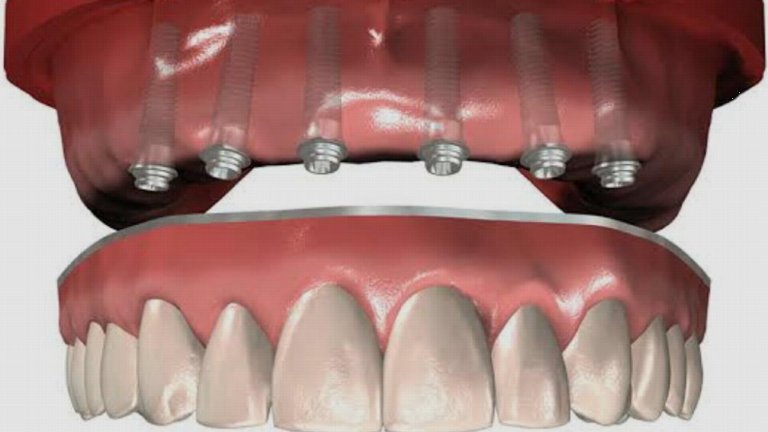
A titanium screw is placed in the bone, which fuses to it (osseointegration) over 3 to 6 months, then a crown is screwed on top.
Pros
- No neighboring tooth affected
- Stops bone resorption
- Lifespan 20-30 years with good care
- Feel and function very close to natural tooth
Cons
- Requires minor surgery
- 4-9 months delay between placement and final crown
- Higher initial cost
When implant is not possible
Insufficient bone volume (can be solved by graft), severe smoking, uncontrolled diabetes, certain treatments (bisphosphonates). A prior 3D scan removes any doubt.
« Over 20 years, an implant costs less than a bridge redone twice. It is an investment, not an expense. »
Our recommendation
For a single lost tooth in a healthy patient: implant. For several adjacent missing teeth or contraindication: implant-supported bridge (fixed bridge on 2 implants without touching neighbors).