 By Dr Kenmo R.
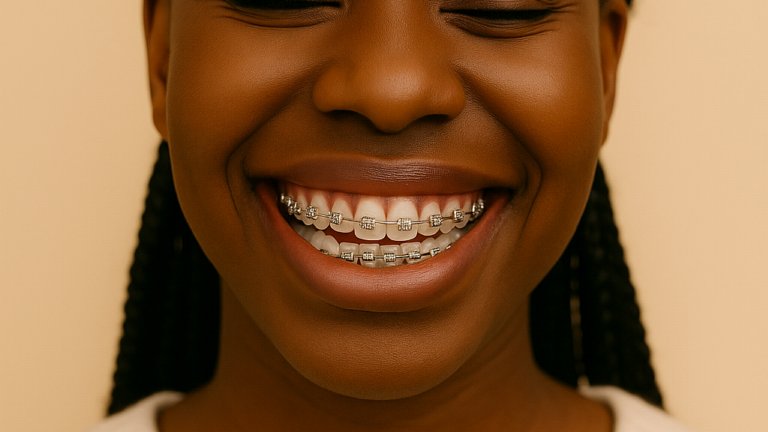
Invisalign, Spark, ClearCorrect: invisible aligner brands keep multiplying. But it is not a universal solution. Here is what clinical practice teaches.
The principle
A series of transparent trays (15 to 50 depending on the case) worn 22h a day, changed every 1-2 weeks. Each tray progressively moves your teeth.
Where it works well
- Mild crowding (lack of space < 6 mm)
- Mild to moderate diastema (gap)
- Relapse after previous orthodontics
- Mild open bite or overbite
Where it works poorly or not at all
- Major tooth rotations (> 30 deg)
- Severe crowding requiring extractions
- Jaw discrepancies (orthognathic)
- Patients unable to wear 22h/24 (compliance)
Real benefits
- Total discretion at work and socially
- Easier hygiene (removable trays)
- No emergency like broken wires with braces
- Superior comfort — no cheek/lip lesions
Often underestimated limits
Wear discipline is key: if you skip trays one day, the timeline is compromised. Over 12-18 months of treatment, that\'s demanding.
« 80 % of the result depends on your regularity wearing the trays. The remaining 20 % comes from the digital plan. »
The prior diagnosis
An orthodontic consultation with X-rays, photos and 3D digital impression is essential. The treatment plan is presented with a video simulation of the final result before any financial commitment.
How much does it cost
Simple case: equivalent to classic orthodontics. Complex case: 30 to 50 % more expensive than braces. Personalized quote after diagnosis.