
 By Dr Kenmo R.
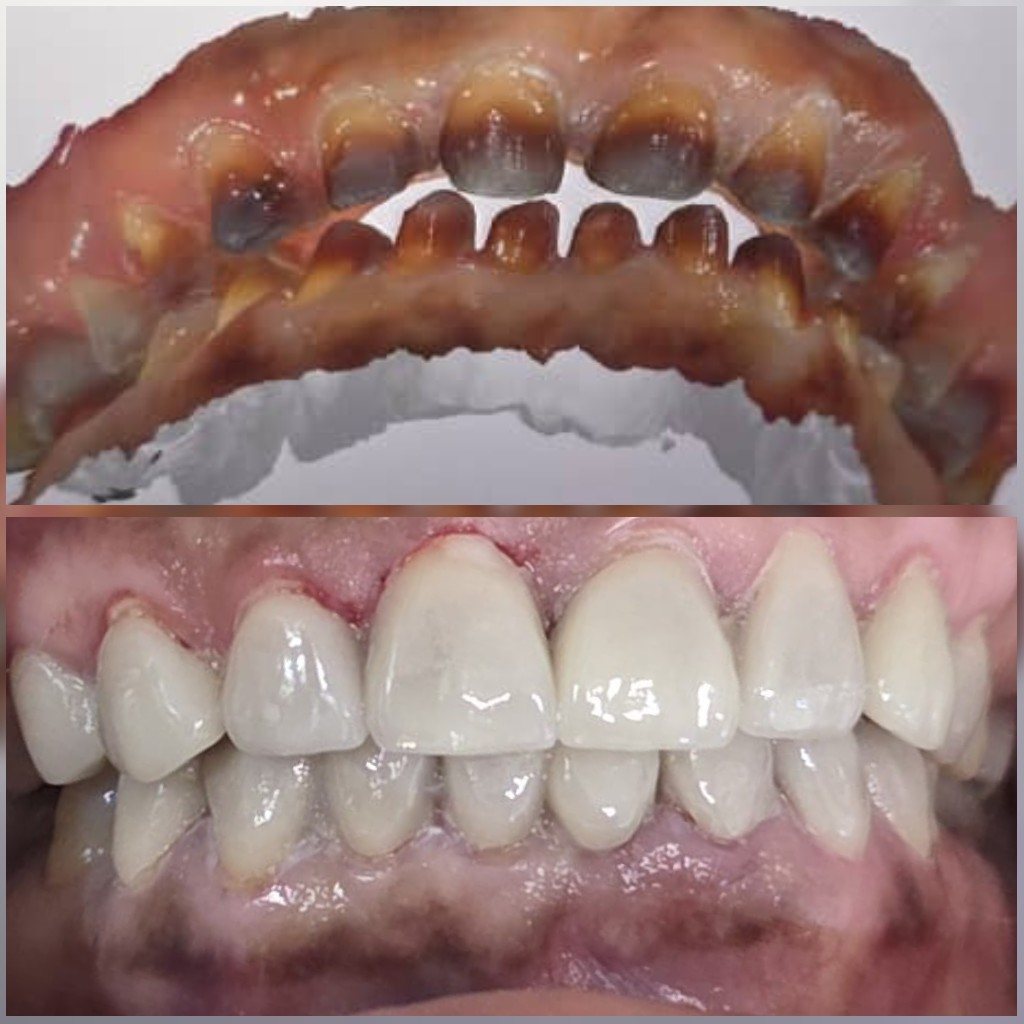
DENTAL VENEERS
1. Definition
Dental veneers are thin shells made of aesthetic material, typically ceramic or composite, that are bonded to the front surface of the front teeth.
They correct imperfections in the shape, color, size, and sometimes the position of the teeth to improve the appearance of the smile, while preserving as much of the natural tooth structure as possible.
2. Indications
Dental veneers are indicated in several clinical situations:
1. Dental discoloration: persistent staining of the teeth that does not respond sufficiently to whitening (tetracyclines, mild to moderate fluorosis, traumatic discoloration, as applicable).
2. Shape abnormalities: conical teeth, teeth that are too small (microdontia), irregular tooth shapes.
3. Size abnormalities: teeth with unesthetic morphology or dimensions.
4. Closing of diastemas: gaps between teeth, particularly between the central incisors.
5. Minor coronal fractures: limited loss of tooth structure in the anterior teeth.
6. Tooth wear: wear of the enamel and incisal edges resulting in compromised aesthetics.
7. Enamel structural defects: hypoplasia and certain developmental anomalies.
8. Aesthetic correction of mild malocclusions: when alignment abnormalities are minor and occlusal conditions permit it.
3. Advantages of Dental Veneers
Dental veneers offer numerous advantages in cosmetic and restorative dentistry:
1. Improved smile aesthetics: they help achieve a harmonious and natural-looking smile.
2. Correction of discoloration: They mask persistent tooth discoloration that does not respond sufficiently to whitening.
3. Correction of shape abnormalities: They can alter the shape of conical, undersized, or irregular teeth.
4. Closing diastemas: They help reduce or close gaps between teeth.
5. Preservation of dental tissue: The preparation is generally less invasive than that required for a full-coverage crown.
6. Stain resistance: Ceramic veneers offer excellent color stability.
7. Biocompatibility: Dental ceramics exhibit good biocompatibility when properly fabricated and placed.
8. Customized aesthetic results: the ability to choose the shade, translucency, shape, and dimensions best suited to the patient’s smile.
9. Durability: Ceramic veneers can have a long lifespan when properly indicated, fabricated, and maintained.
10. Improved self-confidence: They can help improve the patient’s satisfaction with their smile.