
 By Dr Kenmo R.
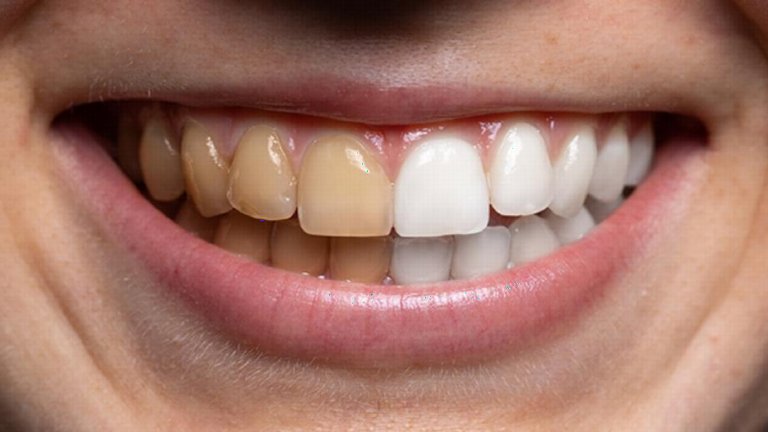
Tooth whitening is one of the most requested aesthetic treatments — and one of the most misunderstood. Here is what really works, what is safe, and what to avoid.
Why teeth yellow
Over time, enamel thins and reveals the dentin underneath, which is naturally more yellow. Add the pigments from coffee, tea, red wine, tobacco, and some medications (tetracyclines).
Available techniques
In-office (1-2 sessions)
25-40% hydrogen peroxide applied after gum protection. Laser or LED activation depending on the case. Visible result in 1 to 2 sessions of 45 min.
At-home (custom trays)
Custom-fit trays + 10-16% gel applied 1-2h per day for 10-14 days. More gradual, sometimes more controlled.
Methods to avoid
- Baking soda, lemon, charcoal: abrasive, damage enamel long-term
- OTC strips without dental advice: can cause hypersensitivity
- « Smile bar » salons: no prior diagnosis, risk of prolonged pain
How long does it last?
1 to 3 years depending on your hygiene and pigment consumption. A maintenance session every 12-18 months significantly prolongs the result.
« Whitening never replaces good hygiene. It is a complement, not a shortcut. »
Possible side effects
Temporary cold sensitivity (24-72h after the session) in 30 to 50 % of patients. No enamel damage if the procedure is well conducted.
Before starting
A prior consultation is essential: scaling, cavity care, assessment of the yellowing cause. Without this diagnosis, whitening can accentuate stains rather than correct them.